Day 1 – Friday 22nd May
Alcala – Cantarannas/Los Naverros – Montenmedio Golf – Bolonia – Playa de los Lances.
Having arrived in Seville at dusk and only collecting the car once it was dark, we managed only swift sp., Tawny and Little Owl on the 21st. So we were keen to get up early (6:00 AM) and out today. The day’s tally started soon after first light with Pallid and Common Swift, Lesser Kestrel, Cattle and Little Egret added from the terrace. The absence of Olivaceous Warbler at last year’s site near the village was disappointing, but a couple of Melodious and Cetti’s Warblers plus Red-rumped Swallow were noted here.
On our jaunt around th e Cantarranas/Los Naveros area, we found Kestrel, Buzzard, Black Kite, 5 Montagu’s Harrier (all but one adult males), a Marsh Harrier and a Short-toed Eagle all of which quickly bumped up the raptor list. Other notable birds included Calandra Lark and Bee-eater. Little Bustard, my target species in this area continues to elude me, but I think that having explored the area more thoroughly, I now have a much better idea where to look!
Puerto de Bolonia/Sierra de la Plata was our next main destination, but en route we diverted to Montenmedio Golf Club. Here we found 15 Bald Ibis which, almost suicidally, favoured feeding on the club’s driving range surrounded by bright yellow golf balls! At Bolonia we had Crag Martin, our first Blue Rock Thrush, Black-eared Wheatear and Woodchat Shrike.
Playa de los Lances was very disappointing. A meagre total of five Kentish Plover, a single Redshank, 10 Sandwich Tern and a handful of Yellow-legged Gull was, in large part, due to the apparent inability of kite-surfers to read the many notices banning them from the reserve. Four or five were braze nly using the shallow lagoon right in front of the birdwatching hide! Needless to say such arrogant disregard of the notices and the needs of wildlife (and birders) made me furious. I only wish my Spanish was up to explaining myself. Apparently the local authorities regularly turn a 'blind eye' to such behaviour since Kite surfing is 'big business' in the area.
With a couple of Booted Eagles over the terrace on our return we ended the day with a modest 61 species. None the less it was a good day since I finally caught up with the Bald Ibis which however, dubious as ticks, were good to see.
Day 2 – Saturday 23rd May
Sanlucar area – Bonanza - Algaida pinewoods – Laguna de Tarelo - Algaida-Trebujena Marshes – Laguna de Medina – Pes de Embalse de Barbate
Another early start meant we got to the mouth of the Guadalquivir in good time to see three Little Swift. Cutting back towards Algaida, via the ‘back way’, a stop at the “settling pools” was rewarded with c500 Collared Pratincole – many at very close range. Amongst the pratincoles was our first Short-toed Lark and the reedy ditch here produced a Little Bittern and the surrounding fields two more (male) Montagu’s Harrier. Bonanza ‘pools’ produ ced the expected obliging White-headed Ducks (5 of them) and Night Heron. Bonanza saltpans were, as in April, disappointing with very few waders and this was compounded by access now being more restricted. (The track along the fence up to the small white building – often one of the best areas – is now closed off. Apparently to stop ‘drinking parties of local youths using the area). Slender-billed Gulls, Avocet, Black-winged Stilt, Ringed and Kentish Plover plus an assortment of BoPs were seen, but little else. Later, by nipping round behind Lagua de Tarelo, we added Dunlin (50+), Curlew Sandpiper, c50 Whiskered Terns and more Slender-billed Gulls. Laguna de Tarelo itself held Spoonbill and Squacco Heron. To my surprise, seconds after admitting that I’d rarely seen Azure-winged Magpie here and never from the car, one suddenly appeared bouncing along from tree to tree! A drive along the Guadalquivir added 4 Marbled Duck, Lesser Short-toed Lark (plus many more ‘greater’), Spectacled Warblers, 3 Purple Heron and still more Montagu’s Harrier (4 males). En route southwards we had c150 Gull-billed Tern, another (male) Montagu’s Harrier and 6+ Red-rumped Swallow at Mesas de Asta marsh. A stop at Laguna de Medina failed to produced the hoped for Crested Coot, but did have a single White-headed Duck, 50+ Black-necked Grebe, another Little Bittern and a very close Mongoose. A final stop at the Presa de Embalse de Barbate added more Booted and Short-toed Eagles plus our first good views of Bee-eaters.
Day 3 – Sunday 24th May
Trafalgar – Atlanterra – La Janda – Embalse de Barbate – Molinos Valley – Cantarranas
At Trafalgar there were c20 Cory’s and 4 Balearic Shearwaters, but the tidal pool here was dry hence no Audouin’s Gull at this usually reliable spot. A brief seawatch at Punta Camarinal (Bolonia) added a further 20 Cory’s Shearwater and there were a few Booted & Short-toed Eagle in the same area. Although the rice fields on La Janda are being re-flooded now, this site only added Little Ringed Plover to the list, but the fields towards Benalup had a minimum of 500 Black Kite, 50+ Griffon Vultures, 6 Booted and 4 Short-toed Eagles. Another attempt to catch up at Spanish Imperial Eagle or Black-winged Kite at the Embalse de Barbate proved unsuccessful, but resulted in a handful more Booted and Short-toed Eagles plus a handsome Black-eared Wheatear. Our final stop before our evening meal was a local one; the Molinos valley. More eagles again (but not the hoped for Bonelli’s Eagle) plus our only Egyptian Vulture of the trip plus a couple of Cirl Buntings.
After a quick meal, we nipped out to the Cantarranas area where we had seven Hoopoes, a Black-winged Kite (eventually) and at least 6 Red-necked Nightjar. Finally we had a Natterjack Toad crossing the track.
Day 4 – Monday 25th May
Laguna de Fuente de Piedra – La Lantejuela – Rio Carbones – Laguna de Zaracutin
The day started well with a Bonelli’s Warbler singing below the house. We had an early start, but little birding, other than ‘en route’, was done until we reached Fuente de Piedra. The lake margin had receded a good deal since mid April and, as a consequence, the main ‘pack’ of Flamingos was very distant. After over an hour of steady searching, a Lesser Flamingo (one of two) suddenly appeared from behind a low island. Its brighter ‘day-glow’ pink plumage and scarlet back plumes made it stick out like a sore thumb. Closer investigation also showed a black face. A White-headed Duck was a surprise, but a single Black Tern (amongst 300+ Gull-billed) was more expected.
Inevitably, we had to explore the La Lantjuela area for bustards and equally inevitably we saw none. However, at the bridge over the Rio Corbones (near Marchena) we found two Rollers, a minimum of 4 Spanish Sparrow (and probably many times that number) and two Olivaceous Warblers; the latter species typically inhabiting riverine tamarisk scrub.
Thanks to a close study of GoogleEarth, we reached Laguna de Mejorada via good back roads without driving through heavily congested Los Placios Y Villafranca (as most trip reports suggest). Here we had a minimum of 7 Olivaceous Warblers and two Rufous Bush Chats. The Olivaceous (again in tamarisks) were with both Melodious and Reed Warblers; a useful comparison both visually and audibly. Searching the run down allotments, Robin found the Rufous Bush Chat 40 metres further along the old concrete aqueduct on an old track beyond some iron gates. We exited to the nearby N IV and headed towards El Palma de Troya. Here we briefly explored Laguna de Zarracatin; c330 Flamingo, Whiskered Tern, Avocet and Black-winged Stilt. Back home in Alcala we had 19 Lesser Kestrels over the terrace (our largest total of the trip).
Day 5 – Tuesday 26th May
Grazalema – Llanos de Libar – Jimena – Castillo de Castellar
Another longish haul over to Grazalema picking up Nuthatch, Thekla Lark, Woodlark, Iberian Chiffchaff and Southern Grey Shrike (at my usual site south of Grazalema village) en route. Despite the confusing mêlée of thousands of Swift over Grazalema village, Robin managed to pick up a single White-rumped Swift; naturally it was just about the only bird of the trip I missed! Exploration of the Llanos de Libar (still not accessible via the Benaoján road) started well with two Bonelli’s Eagle sitting on crags guarding the entrance, but the ‘regulars’ here proved much harder than in April. Goodish views of Black Wheatear, fair ones of Rock Bunting, poor ones of Rock Sparrow, scarcely a view at all of singing Orphean Warbler and no view at all of calling Choughs. At the far end of the valley Subalpine Warbler showed well as did a superb male Black Redstart (surprisingly the only one of the trip), but much less expected was a male Common Redstart. Nearby at Cueva del Gato at least a dozen Alpine Swift milled around the gaping entrance to the massive cave.
At “Castillar bridge” (near the venta on the way up to the old village) we had a single Monarch butterfly showed well but a high flying Two-tailed Pasha was less obliging. The village itself gave us very close views of Blue Rock Thrush and fine views across the countryside, but little else.
Day 6 – Wednesday 27th May
Trebujena - Algaida pinewoods – Laguna Tarelo - Bonanza – Lagunas de Espera & Lebrija –Cantarranas
Another search of the Trebujena area. An exploration of the rough tracks to the north of the Sanlucar-Tr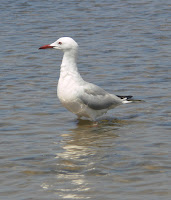 ebujena road produced the hoped for Stone Curlew, a couple more Montagu’s Harriers, a Red Kite, many more Black Kites, a Short-toed Eagle, at least two Lesser Short-toed, 100+ Short-toed and 30 Calandra Larks. A visit to Pinar de Algaida, Laguna de Tarelo and then Bonanza added only a couple of Curlew to the list. However, Little Tern and Slender-billed Gull showed extremely well.
Our next destination was the Espera area. However, our chosen route took us close to Lagunas de Galiana and Cigarrera which are just over the border in Seville province. The first was reed choked and held little, but the second will surely repay closer attention; 2 Black-necked Grebe, a Purple Gallinule, 4 Red-crested Pochards, 2 White-headed Ducks, 2+ Olivaceous Warblers and a small flock of Spanish Sparrows plus numerous Coot. This mix of species, is so similar to nearby Espera, that it must suggest that Crested Coot is a real possibility here. The Lagunas de Espera held a similar range of species, but Laguna Dulce de Zorrilla came up trumps with two Crested Coot. We returned back to Alcalá via Cantarranas area, but our hopes for Little Bustard were dashed by the strengthening wind.
Day 7 – Thursday 28th May
Cantarranas – Atlanterra – Puerto de Bolonia – Playa de los lances – Valdeinfierno – El Palancar – La Teja
Birding today was seriously compromised by gale force winds which, at times, made it hard to stand upright. Accordingly the birding was very difficult with birds, small and large, keeping well down. There were more swifts at Zahara/Atlanterra than I’ve ever seen there previously, but they were whipping by so fast it was hard to get a decent look; Pallid, Common and Alpine were all seen, but not the hoped for White-rumped. The good news at Playa de los Lances was that it was too windy for kite surfers, but the bad news was that it was also too windy for birds! However, Sanderling were added to the list here. With it too windy for much else we headed for the woods off the A381 in the hope that some of the narrow valleys might provide shelter. This they did to some degree and we found good numbers of Iberian Chiffchaffs and Bonelli’s Warblers, but none of the woodland species we were still missing.
Day 8 – Friday 29th May
Alcalá de los Gazules – Gibraltar
Up early for our last day and the morning flight from Gibraltar. Lesser Kestrels, naturally saw us off from the village and, aside from a few other species (it was till very windy), that was the end of our birding jaunt.
With 151 we had some twenty fewer species than my trip in 2008 although we got most of key species –Marbled Duck, Crested Coot, both ‘white-rumped’ swifts, Roller, Rufous Bush Chat, Olivaceous Warblers, Azure-winged Magpie, etc. The difference is largely explained by the relative dearth of waders & gulls (not helped by the closure of a key track at Bonanza) and woodland species (no woodpeckers, no Crested or Long-tailed Tit for example). On the positive side I was able to explore a couple of new sites, the best being Lagunas de Cigarrera.
Thanks to Robin M for his good company on this trip,
Alcala – Cantarannas/Los Naverros – Montenmedio Golf – Bolonia – Playa de los Lances.
Having arrived in Seville at dusk and only collecting the car once it was dark, we managed only swift sp., Tawny and Little Owl on the 21st. So we were keen to get up early (6:00 AM) and out today. The day’s tally started soon after first light with Pallid and Common Swift, Lesser Kestrel, Cattle and Little Egret added from the terrace. The absence of Olivaceous Warbler at last year’s site near the village was disappointing, but a couple of Melodious and Cetti’s Warblers plus Red-rumped Swallow were noted here.
On our jaunt around th
 e Cantarranas/Los Naveros area, we found Kestrel, Buzzard, Black Kite, 5 Montagu’s Harrier (all but one adult males), a Marsh Harrier and a Short-toed Eagle all of which quickly bumped up the raptor list. Other notable birds included Calandra Lark and Bee-eater. Little Bustard, my target species in this area continues to elude me, but I think that having explored the area more thoroughly, I now have a much better idea where to look!
Puerto de Bolonia/Sierra de la Plata was our next main destination, but en route we diverted to Montenmedio Golf Club. Here we found 15 Bald Ibis which, almost suicidally, favoured feeding on the club’s driving range surrounded by bright yellow golf balls! At Bolonia we had Crag Martin, our first Blue Rock Thrush, Black-eared Wheatear and Woodchat Shrike.
Playa de los Lances was very disappointing. A meagre total of five Kentish Plover, a single Redshank, 10 Sandwich Tern and a handful of Yellow-legged Gull was, in large part, due to the apparent inability of kite-surfers to read the many notices banning them from the reserve. Four or five were braze
 nly using the shallow lagoon right in front of the birdwatching hide! Needless to say such arrogant disregard of the notices and the needs of wildlife (and birders) made me furious. I only wish my Spanish was up to explaining myself. Apparently the local authorities regularly turn a 'blind eye' to such behaviour since Kite surfing is 'big business' in the area.
With a couple of Booted Eagles over the terrace on our return we ended the day with a modest 61 species. None the less it was a good day since I finally caught up with the Bald Ibis which however, dubious as ticks, were good to see.
Day 2 – Saturday 23rd May
Sanlucar area – Bonanza - Algaida pinewoods – Laguna de Tarelo - Algaida-Trebujena Marshes – Laguna de Medina – Pes de Embalse de Barbate
Another early start meant we got to the mouth of the Guadalquivir in good time to see three Little Swift. Cutting back towards Algaida, via the ‘back way’, a stop at the “settling pools” was rewarded with c500 Collared Pratincole – many at very close range. Amongst the pratincoles was our first Short-toed Lark and the reedy ditch here produced a Little Bittern and the surrounding fields two more (male) Montagu’s Harrier. Bonanza ‘pools’ produ
 ced the expected obliging White-headed Ducks (5 of them) and Night Heron. Bonanza saltpans were, as in April, disappointing with very few waders and this was compounded by access now being more restricted. (The track along the fence up to the small white building – often one of the best areas – is now closed off. Apparently to stop ‘drinking parties of local youths using the area). Slender-billed Gulls, Avocet, Black-winged Stilt, Ringed and Kentish Plover plus an assortment of BoPs were seen, but little else. Later, by nipping round behind Lagua de Tarelo, we added Dunlin (50+), Curlew Sandpiper, c50 Whiskered Terns and more Slender-billed Gulls. Laguna de Tarelo itself held Spoonbill and Squacco Heron. To my surprise, seconds after admitting that I’d rarely seen Azure-winged Magpie here and never from the car, one suddenly appeared bouncing along from tree to tree! A drive along the Guadalquivir added 4 Marbled Duck, Lesser Short-toed Lark (plus many more ‘greater’), Spectacled Warblers, 3 Purple Heron and still more Montagu’s Harrier (4 males). En route southwards we had c150 Gull-billed Tern, another (male) Montagu’s Harrier and 6+ Red-rumped Swallow at Mesas de Asta marsh. A stop at Laguna de Medina failed to produced the hoped for Crested Coot, but did have a single White-headed Duck, 50+ Black-necked Grebe, another Little Bittern and a very close Mongoose. A final stop at the Presa de Embalse de Barbate added more Booted and Short-toed Eagles plus our first good views of Bee-eaters.
Day 3 – Sunday 24th May
Trafalgar – Atlanterra – La Janda – Embalse de Barbate – Molinos Valley – Cantarranas
At Trafalgar there were c20 Cory’s and 4 Balearic Shearwaters, but the tidal pool here was dry hence no Audouin’s Gull at this usually reliable spot. A brief seawatch at Punta Camarinal
 (Bolonia) added a further 20 Cory’s Shearwater and there were a few Booted & Short-toed Eagle in the same area. Although the rice fields on La Janda are being re-flooded now, this site only added Little Ringed Plover to the list, but the fields towards Benalup had a minimum of 500 Black Kite, 50+ Griffon Vultures, 6 Booted and 4 Short-toed Eagles. Another attempt to catch up at Spanish Imperial Eagle or Black-winged Kite at the Embalse de Barbate proved unsuccessful, but resulted in a handful more Booted and Short-toed Eagles plus a handsome Black-eared Wheatear. Our final stop before our evening meal was a local one; the Molinos valley. More eagles again (but not the hoped for Bonelli’s Eagle) plus our only Egyptian Vulture of the trip plus a couple of Cirl Buntings.
After a quick meal, we nipped out to the Cantarranas area where we had seven Hoopoes, a Black-winged Kite (eventually) and at least 6 Red-necked Nightjar. Finally we had a Natterjack Toad crossing the track.
Day 4 – Monday 25th May
Laguna de Fuente de Piedra – La Lantejuela – Rio Carbones – Laguna de Zaracutin
The day started well with a Bonelli’s Warbler singing below the house. We had an early start, but little birding, other than ‘en route’, was done until we reached Fuente de Piedra. The lake margin had receded a good deal since mid April and, as a consequence, the main ‘pack’ of Flamingos was very distant. After over an hour of steady searching, a Lesser Flamingo (one of two) suddenly appeared from behind a low island. Its brighter ‘day-glow’ pink plumage and scarlet back plumes made it stick out like a sore thumb. Closer investigation also showed a black face. A White-headed Duck was a surprise, but a single Black Tern (amongst 300+ Gull-billed) was more expected.
Inevitably, we had to explore the La Lantjuela area for bustards and equally inevitably we saw none. However, at the bridge over the Rio Corbones (near Marchena) we found two Rollers, a minimum of 4 Spanish Sparrow (and probably many times that number) and two Olivaceous Warblers; the latter species typically inhabiting riverine tamarisk scrub.
Thanks to a close study of GoogleEarth, we reached Laguna de Mejorada via good back roads without driving through heavily congested Los Placios Y Villafranca (as most trip reports suggest). Here we had a minimum of 7 Olivaceous Warblers and two Rufous Bush Chats. The Olivaceous (again in tamarisks) were with both Melodious and Reed Warblers; a useful comparison both visually and audibly. Searching the run down allotments, Robin found the Rufous Bush Chat 40 metres further along the old concrete aqueduct on an old track beyond some iron gates. We exited to the nearby N IV and headed towards El Palma de Troya. Here we briefly explored Laguna de Zarracatin; c330 Flamingo, Whiskered Tern, Avocet and Black-winged Stilt. Back home in Alcala we had 19 Lesser Kestrels over the terrace (our largest total of the trip).
Day 5 – Tuesday 26th May
Grazalema – Llanos de Libar – Jimena – Castillo de Castellar
Another longish haul over to Grazalema picking up Nuthatch, Thekla Lark, Woodlark, Iberian Chiffchaff and Southern Grey Shrike (at my usual site south of Grazalema village) en route. Despite the confusing mêlée of thousands of Swift over Grazalema village, Robin managed to pick up a single White-rumped Swift; naturally it was just about the only bird of the trip I missed! Exploration of the Llanos de Libar (still not accessible via the Benaoján road) started well with two Bonelli’s Eagle sitting on crags guarding the entrance, but the ‘regulars’ here proved much harder than in April. Goodish views of Black Wheatear, fair ones of Rock Bunting, poor ones of Rock Sparrow, scarcely a view at all of singing Orphean Warbler and no view
 at all of calling Choughs. At the far end of the valley Subalpine Warbler showed well as did a superb male Black Redstart (surprisingly the only one of the trip), but much less expected was a male Common Redstart. Nearby at Cueva del Gato at least a dozen Alpine Swift milled around the gaping entrance to the massive cave.
At “Castillar bridge” (near the venta on the way up to the old village) we had a single Monarch butterfly showed well but a high flying Two-tailed Pasha was less obliging. The village itself gave us very close views of Blue Rock Thrush and fine views across the countryside, but little else.
Day 6 – Wednesday 27th May
Trebujena - Algaida pinewoods – Laguna Tarelo - Bonanza – Lagunas de Espera & Lebrija –Cantarranas
Another search of the Trebujena area. An exploration of the rough tracks to the north of the Sanlucar-Tr
 ebujena road produced the hoped for Stone Curlew, a couple more Montagu’s Harriers, a Red Kite, many more Black Kites, a Short-toed Eagle, at least two Lesser Short-toed, 100+ Short-toed and 30 Calandra Larks. A visit to Pinar de Algaida, Laguna de Tarelo and then Bonanza added only a couple of Curlew to the list. However, Little Tern and Slender-billed Gull showed extremely well.
Our next destination was the Espera area. However, our chosen route took us close to Lagunas de Galiana and Cigarrera which are just over the border in Seville province. The first was reed choked and held little, but the second will surely repay closer attention; 2 Black-necked Grebe, a Purple Gallinule, 4 Red-crested Pochards, 2 White-headed Ducks, 2+ Olivaceous Warblers and a small flock of Spanish Sparrows plus numerous Coot. This mix of species, is so similar to nearby Espera, that it must suggest that Crested Coot is a real possibility here. The Lagunas de Espera held a similar range of species, but Laguna Dulce de Zorrilla came up trumps with two Crested Coot. We returned back to Alcalá via Cantarranas area, but our hopes for Little Bustard were dashed by the strengthening wind.
Day 7 – Thursday 28th May
Cantarranas – Atlanterra – Puerto de Bolonia – Playa de los lances – Valdeinfierno – El Palancar – La Teja
Birding today was seriously compromised by gale force winds which, at times, made it hard to stand upright. Accordingly the birding was very difficult with birds, small and large, keeping well down. There were more swifts at Zahara/Atlanterra than I’ve ever seen there previously, but they were whipping by so fast it was hard to get a decent look; Pallid, Common and Alpine were all seen, but not the hoped for White-rumped. The good news at Playa de los Lances was that it was too windy for kite surfers, but the bad news was that it was also too windy for birds! However, Sanderling were added to the list here. With it too windy for much else we headed for the woods off the A381 in the hope that some of the narrow valleys might provide shelter. This they did to some degree and we found good numbers of Iberian Chiffchaffs and Bonelli’s Warblers, but none of the woodland species we were still missing.
Day 8 – Friday 29th May
Alcalá de los Gazules – Gibraltar
Up early for our last day and the morning flight from Gibraltar. Lesser Kestrels, naturally saw us off from the village and, aside from a few other species (it was till very windy), that was the end of our birding jaunt.
With 151 we had some twenty fewer species than my trip in 2008 although we got most of key species –Marbled Duck, Crested Coot, both ‘white-rumped’ swifts, Roller, Rufous Bush Chat, Olivaceous Warblers, Azure-winged Magpie, etc. The difference is largely explained by the relative dearth of waders & gulls (not helped by the closure of a key track at Bonanza) and woodland species (no woodpeckers, no Crested or Long-tailed Tit for example). On the positive side I was able to explore a couple of new sites, the best being Lagunas de Cigarrera.
Thanks to Robin M for his good company on this trip,
John