Sunday, 19 April 2009

April Birding Trip - Day 3 - 4th April

Day 3 - Saturday 4th April: A Kite and Bull Story!


RG - The wonderful quality continued when, in thick morning mist, we stopped at a bridge near Benalup a few miles from Alcala, and I saw my first male Spanish Sparrow - quite a stunner for a sparrow. (Despite stopping here specifically for this species – which seems to like eucalyptus groves hereabouts - I again missed them at this site. It was only after searching for several more minutes and seeing only House Sparrow that Robin realised how lucky he’d been! - JC).


Driving along a minor road/track at Cantaranas/ Las Naveros we had three more Red-rumped Swallows, but initially we didn't find anything new, apart from hearing a Hoopoe. (You weren’t complaining at the time Robin! – JC). However, once we got out of the car and explored a side track we saw a distant silhouetted raptor perched on a fence post which John identified as a Black-shouldered Kite. We walked down a track to get nearer, but the bird seemed to have dropped out of sight. Perhaps it was disturbed by another hunting male Montagu's Harrier. (The sight of some distant cattle persuaded me, if not Robin, that it was time to beat a retreat – a decision amply vindicated given what soon unfolded! Being used to Wiltshire’s finest Aberdeen Angus, Robin was keen to proceed further down this track, but I insisted that we turn back. Robin clearly thought I was a bit of a wimp, but those distant bulls had a somewhat sinister bulk and mien. Shortly afterwards a horseman passed by, but failed to notice us. Then a clanking of bells announced the arrival of several cows and a second horseman carrying a long pole. He spoke to me in clipped and urgent Spanish amongst which, thankfully, I managed to pick out the words "toros bravos" - fighting bulls! Obviously they'd brough the 'ladies' along to tempt the bulls in the right direction - unfortunately this was in our direction! It was pretty clear he wanted us out of the way and fast! We walked back to the car, but paused to get a drink from the boot at which point the second horseman reappeared urgentlt gesticulating & shouting at us to get in the car - my Spanish appears to improve in such circumstances! This we did and shortly thereafter a posse of large and irritable looking fighting bulls thundered along the track we’d just vacated! A close call! Thank goodness that a certain habitue of Grove Ferry wasn't there - these weren't dairy cows, 007, but real Spanish fighting bulls! - JC)

Later, nearly at the end of the Cantaranas road, John found another Black-shouldered Kite perched on a wire. (Actually, I saw it fly up to the wire, but didn’t let on what it was at first since I knew Robin much preferred to ID birds himself rather than be told. He was very impressed that I’d identified this distant dot until I admitted I’d seen it fly in! – JC). Soon it flew up and started hunting, hovering, then gliding with wings held in a V more pronounced than any harrier, then off over the hill: a truly stunning bird. A stop on the Conil road was notable in that it produced my first new butterflies - there hadn't been many up to now apart from a few Large Whites, and abundant Painted Ladies and Clouded Yellows everywhere - these were 3 Green-striped Whites, like Bath Whites on the upperwing but with a green-striped underwing. Here there was also a pair of Stone Curlews.

The Roman ruins at Baelo Claudia near Bolonia were an unforgettable experience, the Temple, the Theatre, the dramatic seaside setting with the largest moving sand dune in Spain - and the birds! Three stunning Black-eared Wheatears included a very tame pair - the female was gathering nesting material around the theatre - and there were two Thekla Larks which we examined closely - identification from Crested was clinched by the convex, rather than straight, lower mandible. (Both species seem to be present here – although previously I’ve only seen Crested at this site – JC) Next, driving up to the spectacular Sierra de la Plata, we stopped at a beetling crag where appropriately we had Crag Martins, a superb singing Blue Rock Thrush and two splendid Egyptian Vultures. The thrush was perched heroically right at the top of the cliff, and the vultures perched briefly then flapped away, their black and white plumage more stunningly immaculate than I expected. A bit further on - actually near the top of the hill, John found my first, much hoped for, Spanish Festoon butterfly, but I didn't get much of a view, just good enough to identify it. Also here was an Iberian Green Woodpecker.
What a host! Not content with showing Robin the birdlife of the area I also knew that, as a fellow History graduate, he’d enjoy some decent classical ruins – it’s purely fortuitous that they’re in a good birding location! Not only that but, even though my pretense of knowing nothing about butterflies isn't too far from the truth, I also managed to find Robin a butterfly tick too - JC

At the La Janda marshes raptors were back in view with a superb Short-toed Eagle, a female Montagu's Harrier and another Marsh Harrier. On the marshy ditch there were about 5 Purple Gallinules. On the way back to Alcala a small pond near Embalse de Barbate produced a Wood Sandpiper, and another Iberian Green Woodpecker flew in front of the car. All was by no means over for the day however - near the embalse (reservoir) there was another superb hunting Black-shouldered Kite, the first John had seen here, and the third for the day!

Since colonising Cadiz province in the mid/late 1990s (surprisingly late given the proximity of Africa), Black-shouldered Kite has rapidly become relatively common in the area. I see them on pretty much every visit these days - even when I'm not looking seriously and almost every time I see them at another 'new' site. With up to 40 birds wintering on La Janda, Cadiz province is now probably the best place to see the species in Europe; in my experience it's much easier here than the much touted Extremadura! In fact I've now seen them in about a dozen different places in the area, but, annoyingly, not yet from our terrace (although I have seen them just outside the village).

April Birding Trip - Day 2 - 3rd April

Day 2 - Friday 3rd April: The Tickfest Begins!
RG - A totally mind-blowing day for me producing the amazing total of seventeen new birds! First to the mouth of the River Guadalquivir where we found a really obliging couple of Little Swifts, flying over the beach and repeatedly just above our heads! With paddle-shaped wings, square tails, fluttering flight and Wilson's Petrel-like white rumps, they were absolutely distinctive. Next to Bonanza beside the Guadalquivir where John knew of little ponds (these are what I call ‘Bonanza Pools’ – JC)
set among market gardens. These held White-headed Ducks, an ear-shattering singing Great Reed Warbler right by the road and two Purple Gallinules. The latter are extraordinary creatures with huge pink bills and legs and the habit of erupting out of the reeds only to drop down again very soon. Also here was a female Little Bittern - the only one of the week - and the sound (but not sight) of the first migrating Bee-eaters.

At the nearby salt-pans the sheer quantity and quality of the water birds was staggering to someone not used to birding abroad - lots of Greater Flamingos (I had to pinch myself to realise that they were wild) and equally lots of Black-winged Stilts on unbelievably long legs plus about a hundred immaculate Slender-billed Gulls (they really should be called “long-billed”), c25 Glossy Ibises, Spoonbill, Avocets, c20 Kentish Plovers, c10 Gull-billed Terns, a Little Tern, 3 Little Stints, c5 Curlew Sandpipers, Greenshank, and the first sight of migrating Bee-eaters - the first of many. The best bird of all was probably a very confiding Short-toed Eagle perched on a pylon, which flew ahead of us and gave some stunning close-up views, a terrific bird. (This species proved to have the knack of appearing at very close range only when my camera card was full or the camera itself wasn’t to hand! - JC)

Also here were Sardinian and Fan-tailed Warblers ("zitting cisticolas"), probably South Spain's commonest warblers - the former seems to be everywhere. At the salt marshes of La Portugueses we were treated to no fewer than four species of Lark - the common one being Crested, accompanied by, in descending order of frequency, Short-toed Larks beside the tracks, wonderful Calandra Larks, large larks with long wings, black below like Green Sandpipers', singing beautifully over the salt marshes, and a few grey, rather sparrow-like Lesser Short-toed Larks, which we didn't hear singing. (Thekla Lark is supposed to be present in the area, but I’ve never personally had them here – JC). When we visited the Trebujena marshes the Short-toed Larks became much commoner, flying around in flocks in front of the car. The raptors included 3 Marsh Harriers, both species of Kite, and Booted Eagles, the pale phase birds stunning with black and white wings, the dark phase more difficult to identify, sometimes slightly resembling the common Black Kites. At the Trebujena Marshes there were also 3 Great White Egrets, a male Hen Harrier and Stone Curlews.
At the Laguna Tarelo heronry on the edge of Algaida Pine Woods there were c15 Night Herons, a wonderful pair of Spoonbills, White-headed Duck and Purple Gallinule among the many Cattle and Little Egrets, but no sign of Squacco Heron. Serin were singing among the pines. (The White-headed Ducks were missing here a week later when I tried to show them to a Belgian birder – which suggests that ‘Bonanza Pools’ are important site – and apparently an unprotected one – for this species – JC)

At
Algaida pinewoods we did not find Azure-winged Magpie, but I had my first Griffon Vultures, superb great birds soaring over the trees, also more Booted Eagles and a Swallowtail butterfly - the only one of the week. (Azure –winged Magpies now seem very hard to find hear with most visitors failing to find them – in many visits over the last few years I’ve only seen them twice! JC)
At another of John's sites is a small marsh near Mesas de Asta which is set among rolling farmland. Here there was a wonderful male Montagu's Harrier was floating nearby - just fantastic. A Whiskered Tern appeared for a brief while over the lake, which had plentiful stilts and Avocets, also a flock of Ruffs and Black-tailed Godwits. (Later in the spring there are numerous Gull-billed Terns here – a somewhat incongruous sight hawking over the surrounding wheat fields! - JC).
The final venue of a mega-day's birding was Laguna de Medina, where John decided it was time I had another tick, so on cue he found a distant Collared Pratincole (which I didn't see), but soon thereafter found three more flying over the path. As we walked back to the car we found about 500 more (!), hawking for insects over the lake in the failing light: they resemble marsh terns but with a hint of plover about them too. Also here I heard, but didn't see, my first Savi's Warbler, and there were more stilts. New for the day were two or three Black-necked Grebes, Nightingales seemed to sing from every bush, and a couple of Great Reed Warblers "crunched" away from the crunched" away from the reeds around the lake. What a day!

It was a great day, made all the better for Robin's company. I should add that whilst Robin may have a 'Ford Model T' life list (i.e. well below 300 in the UK), he's actually more of a Ford Mustang birder. His recall of bird songs and calls is superb and far better than mine. He also insisted that, whilst I was 'allowed' to alert him if I found something good, he'd much prefer to do the actual identification for himself. This did cause me a few anxious moments, but was a terrific way for Robin to learn the birds. He always got the ID right, even on relatively poor views, usually hesitantly commenting something like "It looks like a ******!" and my usual reply "There's a reason for that ..." quickly became the catch phrase of the week!

April Birding Trip - Day 1 - 2nd April

Although Robin Griffiths and I had been good friends at University and had always kept in contact, we hadn’t actually seen one another for the best part of 25 years. Over a year ago I’d invited him out to Spain and this April he came. Being a resident, non-twitching patch worker in that ornithological desert otherwise known as ‘Wiltshire’, I knew Robin would have a good time. Even more so since this was his first trip abroad for over 30 years, his first ever ‘full-on’ birding trip to the continent and his first ever trip to Spain. I knew that the lifers would come thick and fast; to find out how thick and fast, read on!

Headings, odd clarifications, amendments and comments aside, this account (in italics) is essentially Robin’s, but I’ve also added some additional, initialled, bracketted and/or un-italicised comments to enlarge upon Robin’s comments.


Day 1 - Thursday 2nd April: Arrival
RG - John and I met at Gatwick and flew to Gibraltar, arriving at 6 PM, where, while we organised a hire car, we noticed the odd swift, and I saw my first lifer - Pallid Swift. En route to John's house at Alcala de Los Gazules we saw three more new birds for me - Spotless Starlings on wires beside the road (very glossy "Brylcreem" starlings), 2 or 3 superb Red rumped Swallows flying around a bridge "with long tails stuck on behind", and, at Alcala itself, Lesser Kestrels hawking for insects at dusk with the epicentre of their activity being - John's house! They were superb, like daintier, more brightly coloured Kestrels, and flew around allowing point-blank views. Other birds noted on route were Cattle Egrets, a Woodchat Shrike and a few White Storks. A Nightingale could be heard singing from John's terrace (actually his flat roof.) All of these birds would be recorded often throughout the week, in some cases many times a day.

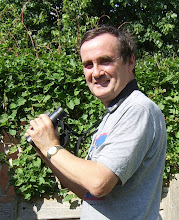
This proved to be a gentle start to a first rate week of good quailty birding. Unfortunately, with no 'staff photographer' along, the only photos are my mediocre efforts!
- JC

Day 8 - Back to UK

DAY 8 - Thursday 19th February
Naturally the local Lesser Kestrels serenaded our departure from the village this morning. Since we had get to Gibraltar before 10:00 for our flight we had little time for birding today. A quick investigation of the Valdeinfierno produced Raven, but little else.

Overview
Although it was sunny and often pleasantly warm during the day, it was distinctly chilly at night. Despite being pretty much as far south as you can get in Europe, a thick jumper is a must at this time of the year. This sunny weather was fortunate as rain had been forecast before we went and even our day in Grazalema was dry. It was a great trip bettering the total attained in February 2007 by 22 species (135 vs 157 - although we did have two more whole days birding this year). Yet we still managed to miss ten species seen on the earlier trip - some of which we saw several times in 2007 (e.g. Squacco Heron, Peregrine, Long-tailed Tit & Cirl Bunting). This higher figure is also partly due to the better weather, improved local knowledge and the heavy rain earlier in the winter rainfall which provided plenty of good habitats. The latter meant that, for the first time in years, Espera was in excellent condition and not virtually dry so after many attempts I finally got to see a ‘real’ Crested Coot there. It also accounted for the large number of shallow “lagoons” on Trebujena Marshes which made them so good for Glossy Ibis and such like. However, this welcome wetness probably undermined our hopes of seeing any sandgrouse at this site. Had we opted for a earlier start each morning, then a target of c170 would have been quite feasible.

Birding highlights included a superb male white-spotted Bluethroat on Trebujena Marshes, an obliging Alpine Accentor at Llanos de Libar, finally nailing two un-neck collared Crested Coot at Espera and, above all, some superb views of Little Swift at Chipiona (at last!). Also very pleasing was the sense that I’m finally getting to know some of the sites. Finding both an additional route into and around the Trebujena marshes and the ‘settling pans’ near Sanlucar was also a big plus. It was also evident that Great White Egret has increased markedly in recent years (although the extensive flooding may have brought more birds out into the open). Glossy Ibis also seem to be doing very well. On the downside I was surprised to see no Black-shouldered Kite on La Janda although, having seen them elsewhere, we didn’t look very hard.

John Cantelo - February 2009

For photos of the trip see :-
http://www.flickr.com/photos/tonymorris/collections/72157614157792303/

Monday, 30 March 2009

Day 7 - 18th Feb - A Little Swift Adventure!

DAY 7 - Wednesday 18th February
As usual the Lesser Kestrels (15+) above the village provided the first excitement of the day.
Chipiona We arrived a little later, at 10:10 or so, than intended, but within minutes we found Little Swift - first one, then another and another until we had eleven birds weaving around above us. Yet within ten minutes all vanished with extraordinary speed; moral get here as early as possible! In the bright sunlight the birds showed extremely well; dark plumage, ‘wrap round’ white rump, prominent white chin, narrow white forehead and distinctive wingshape. Checking the small harbour for any odd gulls we had a dozen Kittiwake, but none of the white-winged gulls we’d hoped for (there having been an unprecedented invasion of these birds in Spain this winter).


Algaida Pine Woods Hoping to pick up some more species (notably a certain elusive magpie!) we headed straight back to the Algaida area. Pausing en route by the road near Bonanza, we had 4 (or more) Booted Eagles and c50 Slender-billed Gulls. On Laguna de Tarelo we had both pochards, more White-headed Ducks, Night Herons and, above the marshes beyond the lagoon, 3 Little Gull and 500+ Black-tailed Godwit.
Salinas de Monte Algaida Turning back towards the river we explored the ‘back’ of Bonanza where we had 4 Common Cranes, c100 Lesser Short-toed Larks, a handful of Calandra Larks, 5 Spanish ‘Yellow’ Wagtails, a Great White Egret, a fly-over flock of 150+ Red-crested Pochards and the inevitable noisy gaggles of Flamingos.


Trebujena Marshes Instead of heading back along the river we opted for exploring the track running south to the east of Algaida. Above the woodlands we had a Short-toed Eagle, 10+ Booted Eagles, 3 Red Kites and c20 Lesser Kestrels. The eagle was an obliging bird, but the initial rear-on view as it perched on a small pylon made ID less than obvious – until the bird’s extraordinarily large, broad head was noted. Also present on the flooded ‘polders’ were c20 Glossy Ibis and another Great White Egret. Closer to Sanlucar the rough track gave way to a new metalled road (and evidence of future building developments). Here a couple of ‘settling pans’ provided excellent feeding for a flock of Little Gulls and Kittiwakes. A speculative stop here revealed that there were c100 of the former and c10 of the latter, but I was surprised to find a winter plumaged Whiskered Tern lurking amongst them. (In fact, on checking references back in the UK it transpired that Whiskered Tern winters in small numbers on the Coto). Also present on these pools were c10 Black-necked Grebe and many Pochards and Coots. The flooded field adjacent to the ‘settling pans’ provided a productive feeding ground for c100 Glossy Ibis, c50 Black-winged Stilt and a lone Greenshank. This looked a superb habitat to explore later in the year (esp. for pratincoles).


Presa de Embalse de Barbate Foregoing a second visit to Laguna de Medina, we headed for the dam at Embalse de Barbate in the hope of a Spanish Imperial Eagle. Although this hope proved false, we did find the flock of Common Cranes (34) we’d seen on the 14th, a distant Bonelli’s Eagle and c30 Griffon Vultures. Amongst the latter was an individual that, although it was a typical Griffon on plumage grounds, consistently soared with drooping wings; an instructive lesson either in the variability of birds’ habits or the fact that they don’t read the same field guides!


La Janda Before dusk fell we made a quick dash to La Janda - here we had a Hen Harrier, numerous Golden Plovers and Lapwings, 43 Purple Gallinules and, as dusk finally fell, 111 Black Kite slipping into roost!

Day 5 - 17th Feb - In Search of Spanish Sparrows

DAY 6 - Tuesday 17th February
Naturally our day started with Lesser Kestrels around the village, but this time a small mishap (OK, I admit it, I backed into a parked car!) meant Tony had time to get some great flight shots of the species. After opting out of looking at Trafalgar at the weekend we decided to head over there today for a quick seawatch.


Trafalgar The shallow tidal pool here had its usual small flock of Audouin’s Gull (39) plus four Mediterranean Gulls, a small group of Sandwich Terns, Sanderling (c30) and a few Kentish Plover. Seawatching here was a novel experience since amongst the expected passing seabirds (2 Great Skuas, 10+ Cory’s Shearwaters, good numbers of both Sandwich Terns and Gannets) was the odd raptor (Marsh Harrier and Lesser Kestrels) and a single Black Stork! A careful scan of the rocks here turned up three Turnstone. Two Hoopoes were flushed from the dunes here.


Los Naveros Since it was not far off the route to the next site, we decided to detour to the Los Naveros area again to search for bustards and Stone Curlews. Happily, after a brief search we found three Stone Curlew which, whilst not the hoped for bustards, were an excellent addition to the list. Another Hoopoe here allowed the others to catch up on a species they’d missed earlier that day. Instead of returning the way we’d come, we pushed on along the track which, it transpired, came out on the new main road near Conil de la Frontera passing some more excellent habitat en route.


Laguna de Taraje (Lagunas de Puerto Real) Having seen them here last February, I was hopeful about seeing Spanish Sparrow along the rough track to the laguna. Although the first sighting of a dust bathing bird didn’t entirely convince everyone when we drove up to the farm beyond the laguna, we had excellent views of winter plumaged Spanish Sparrows (c20). On our return along the track we had more birds at the first location. Although not as well marked as they are in mid-summer due to the dull sandy fringing to the black feathers, there were still some well marked birds here; a rich chestnut crown, white cheeks and narrow eyebrow, a large ‘bib’ (albeit obscured by that pale fringing) and obvious flank streaks. Doubtless there were also some Spanish Sparrows amongst female birds, and indeed some looked larger billed, but we were so occupied in trying to decide whether all the males were ‘pure bred’ that we didn’t really look too hard! On the laguna itself there were 140+ Red-crested Pochard and 18 Shoveler. Also seen here were 2 Ospreys, 2 Little Ringed Plover, c80 Golden Plover and single Stone Curlew (for which this is an excellent site). Driving back to the main road a very obliging Hoopoe fed besides the track.


Sancti Petri Despite my personal distaste for the urban sprawl that surrounds Cadiz Bay, I was out voted so our next stop was Sancti Petri. The road into the old village is flanked by muddy lagoons and ends in a narrow spit overlooking the marshes. This rich habitat held numerous Kentish Plovers, Knots, Grey Plovers, 30+ Bar-tailed Godwits, 10+ Whimbrel and two each of Curlew and Oystercatcher. The lagoons beside the road held 400+ Dunlins, 50+ Little Stints and 30+ Redshanks. Returning towards the motorway we passed more interesting habitats where we had a Great White Heron feeding in somewhat atypical habitat - a flooded pine woodland.

Sunday, 22 March 2009

Day 4 - 16th Feb - Grazalema Bound

Grazalema - Monday 16th February

Our target today was an exploration of the Grazalema area. Although the nearby Alcornocales Natural Park has both good birds and attractive scenery, for several key species – Black Wheatear and, in winter, Alpine Accentor, a visit to Grazalema is de rigueur. En route we had an Ibex and a Gennet – the former very much alive, but the latter unfortunately a long dead and very squashed! Also en route and at a regular site – at the venta above Ubrique – we found our first Thekla Lark. Interestingly, each of us focussed on a different feature of this species to clinch the identification; I went for bill shape, Tony zeroed in on the birds ‘spiky’ crest and Jack noted the more crisply marked chest pattern. We all got the ID right, but took different routes to get there!

Unfortunately, we found that the road was closed just short of Montejaque – our destination - which meant an unexpected 45 minute detour via Ronda; in hindsight it would have been better to come via Ubrique. Happily, once we got there, the Llanos de Libar came up to expectations. Even though I’ve now been there a good few times, it still seems improbable that we have to access this fantastic area by turning back into the village’s labyrinthine streets and follow a remarkably unpromising concrete road before lurching sharp right to get onto the route through the valley. Although we paused below the first huge cliff face by the white water tank for a while we saw no sign of the usual Bonelli’s Eagle here nor, less surprisingly, the Wallcreeper that has wintered in the valley. Blue Rock Thrushes soon showed themselves as we pushed up towards the low rocky ‘saddle’ that is always a productive spot to search. No sooner had we arrived than we found Black Wheatears (6+) and Rock Buntings (15+) amongst the rocks besides the road. As Tony and jack admired the wheatears and buntings, I climbed a little higher up the slope where I quickly found two Alpine Accentors. One showed so well and so closely that it was clear that it realised that I’d left my camera in the car! Unfortunately it flew before Tony could get close enough for a photo. Although much less trumpeted than the Puerto Palomas site above Grazalema this is a more reliable (and arguably more convenient) site for the species in winter. It was disappointing, though, that neither Rock Sparrow nor Cirl Bunting were present here; the first is a notoriously elusive species for which this site is usually a ‘banker’ whilst, unaccountably we never saw the latter on the trip at all! A careful scan back down valley quickly produced a soaring Bonelli’s Eagle so we returned to the water tank for a closer view. Shortly afterwards, we picked up the Bonelli’s at much closer range. This was largely thanks to Peter Jones (a local birder who originally put me onto this valley) whose tip - to look for a fast moving shadow against the rocks - when looking for this species certainly paid off in this case.

Driving back via Grazalema proved to be a good move since just outside the village on the Ubrique road, we had two Southern Grey Shrike. In fact, no sooner had I said we ought to look out for the species here than Jack spotted one on a telegraph wire! This was a species that Tony, our team photographer, particularly wanted to see and so it was very pleasing to obtain such good views and note the diagnostic features; a narrow white supercilium running across the forehead, restricted white wing flash and dull greyish-pink underparts contrasting with white cheeks. As a bonus, when we rolled to a stop to look at the shrike, an Iberian Green Woodpecker landed on the telegraph pole next to the car! In the event we heard several more and saw at least two birds. The best view was obtained of a greyish faced black moustachioed female. Further along at the hairpin bend just before Benaocaz we had two more Black Wheatears and another Bonelli’s Eagle.

ALL photos © Tony Morris
Note that all of the original photos can be seen (in better quality) at :-
http://www.flickr.com/photos/tonymorris/collections/72157614157792303/
Many thanks to Tony, not only for his company, but also for permission to use his photos.